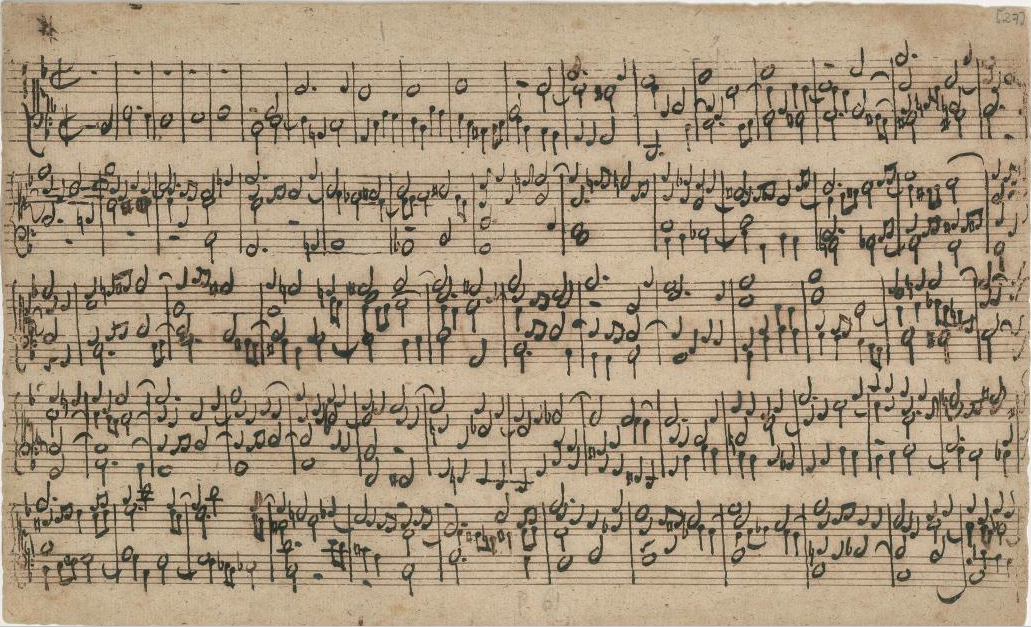
Johann Sebastian Bach, L’Art de la fugue, Contrepoint 14 (inachevé), manuscrit autographe (1749), Staatsbibliothek zu Berlin
“Criez de joie pour le Seigneur, vous qui lui obéissez. Pour ceux qui ont le coeur pur, il est bon de chanter sa louange. Remerciez le Seigneur avec la cithare, jouez pour lui sur la harpe à dix cordes. Chantez pour lui un chant nouveau, rythmez bien vos cris de joie avec tous vos intruments.” Voilà comme l’un de plus grands poètes et rois de l’histoire chante et professe, avec une passion presque bouleversante, son amour intime et profond pour son Dieu. La musique prend une place prépondérante dans les Psaumes de David, suscitant et élevant la conception de la prière vers une dimension entièrement nouvelle et différente où l’intégration de l’Absolu ne se passe que grâce à la musique.
J’ai toujours pensé que l’expérience humaine avec cet unique art de la communication qui est la musique fût l’une de plus révélatrices, même métaphysiques, qu’on peut éprouver – pas seulement à cause de la force et la douceur de l’absorption dans le moment quand on l’écoute, entrant un univers tout imprévu et mystérieux, mais aussi à cause de se trouver comme un témoin de la réunion de toutes les parties les plus essentielles qui constituent la vie même.
Ayant croisée une écriture exquise sur l’évolution de la mélodie et sa signification au fil des siècles dans une collection d’essais de Milan Kundera, Les testaments trahis, elle m’a fait réflechir sur cette diversité que la mélodie offre – parfois cachée dans la structure solide du contrepoint comme un pilier de stabilité d’un morceau tout en ne revendiquant pas une place strictement individuelle et dominante dans le cadre de la composition, parfois souple comme l’air, respirant et s’élevant au-dessus des autres voix, guidant notre âme dans un temple délicat de l’introspection tranquille.
Il me semble que l’art de la mélodie, jusqu’à Bach, gardera ce caractère que lui ont imprimé les premiers polyphonistes. J’écoute l’adagio du concerto de Bach pour violon en mi majeur : comme une sorte de cantus firmus, l’orchestre (les violencelles) joue un thème très simple, facilement mémorisable et qui se répète maintes fois, tandis que la mélodie du violon (et c’est là que se concerne le défi mélodique du compositeur) plane au-dessus, incomparablement plus longue, plus changeante, plus riche que cantus firmus d’orchestre (auquel elle est pourtant subordonné), belle, envoûtante mais insaisissable, immémorisable, et pour nous, enfants de la deuxième mi-temps, sublimement archaïque.
La situation change à l’aube du classicisme. La composition perd son caratère polyphonique ; dans la sonorité des harmonies d’accompagnement, l’autonomie des différentes voix particulières se perd, et elle se perd d’autant plus que la grande nouveauté de la deuxième mi-temps, l’orchestre symphonique et sa pâte sonore, gagne de l’importance ; la mélodie, qui était “secondaire”, “subordonnée”, devient l’idée première de la composition et domine la structure musicale qui s’est d’ailleurs transformée entièrement.
Alors change aussi le caratère de la mélodie : ce n’est plus cette longue ligne qui traverse tout le morceau ; elle est réductible à une formule de quelques mesures, formule très expressive, concentrée, donc facilement mémorisable, capable de saisir (ou de provoquer) une émotion immédiate (s’impose ainsi à la musique, plus que jamais, une grande tâche sémantique : capter et “définir” musicalement toutes les émotions et leurs nuances). Voilà pourquoi le public applique le terme de “grand mélodiste” aux compositeurs de la deuxième mi-temps, à un Mozart, à un Chopin, mais rarement à Bach ou à Vivaldi et encore moins à Josquin des Prés ou à Palestrina : l’idée courante aujourd’hui de ce qu’est la mélodie (de ce qu’est la belle mélodie) a été formée par l’esthétique née avec le classicisme.
Pourtant, il n’est pas vrai que Bach soit moins mélodique que Mozart ; seulement, sa mélodie est différente. L’Art de la fugue : le thème fameux est ce le noyau à partir duquel (comme l’a dit Schönberg) le tout est créé ; mais là n’est pas le trésor mélodique de L’Art de la fugue ; il est dans toutes ces mélodies qui s’élèvent de ce thème, et font son contrepoint. J’aime beaucoup l’orchestration et l’interprétation de Hermann Scherchen ; par exemple, la quatrième fugue simple ; il la fait jouer deux fois plus lentement qu’il n’est coutume (Bach n’a pas prescrit les tempi) ; d’emblée, dans cette lenteur, toute l’insoupçonnée beauté mélodique se dévoile. Cette remélodisation de Bach n’a rien à voir avec une romantisation (pas de rubato, pas d’accords ajoutés, chez Scherchen) ; ce que j’entends, c’est la mélodie (un enchevêtrement de mélodies) qui m’ensorcelle par son ineffable sérénité. Impossible de l’entendre sans grande émotion. Mais c’est une émotion essentiellement différente de celle éveillée par un nocturne de Chopin.
Comme si, derrière l’art de la mélodie, deux intentionnalités possibles, opposées l’une à l’autre, se cachaient : comme si une fugue de Bach, en nous faisant contempler une beauté extrasubjective de l’être, voulait nous faire oublier nos états d’âme, nos passions et chagrins, nous-mêmes ; et, au contraire, comme si la mélodie romantique voulait nous faire plonger dans nous-mêmes, nous faire ressentir notre moi avec une terrible intensité et nous faire oublier tout ce qui se trouve en dehors.
Il y a longtemps que je t’aime jamais je ne t’oublierai
A la claire fontaine
I need all the time I have and a thousand times more than all the time I have and most of all I’d like to have all the time there is just for you, for thinking about you, for breathing in you.
Franz Kafka to Milena Jesenská – Letters to Milena
‘Long have I loved you, never will I forget you.’ The words of the well-known French chanson fall like a soft rain while retaining all the solemnity of a promise. There is a deeply touching element to its extraordinary simplicity, to the melancholy lilting of its melody. The chanson is a tender plea like a child with outstretched hands waiting for its mother’s caressing embrace. In the very same way it is direct and unassuming, humbled before the cathartic presence of a quiet grief that resembles a beaten rose – a glistening raindrop gently kissing the velvet folds of a petal, bending the head of the flower towards the ground by its weight, yet at the same time enhancing the contours of the rose’s beauty like no ray of luminescence could. Il y a longtemps que je t’aime, jamais je ne t’oublierai. I know of no words of love, of no promise more simple and straightforward, trembling in an echo of a tender memory.
I made the wonderful discovery of A la claire fontaine while watching the movie adaptation of William Somerset Maugham’s novella The Painted Veil which I read a few years ago. I remember being profoundly moved by the delicate chanson from the very first moment, but it was not until a few years later that I came to appreciate in a very personal way the numerous palpable dimensions of feeling and beauty hidden within this seemingly simple poem.
Very often we are reluctant and unwilling to address and acknowledge the presence of grief in our lives, trying to smooth it over like an uncomfortable crease on a silk cloth even though its stabbing, paralysing and overwhelming insistence lurks in the shadow of our footsteps like an abandoned lover. It took me a long time to understand there is no shame in grief, in tears; just the contrary – there is sacredness in those words that are too weighty to be expressed by human language. Grief – that is Abraham taking his beloved son Isaac up Mount Moriah, in an act of unquestioning obedience and trust, to sacrifice him to the One who promised to bless him with fruitful offspring. Grief – that is Christ shedding warm tears in front of Lazarus’s tomb, lying in freezing solitude on the parched ground of the Ghetsemani garden in the sombre shade of olive trees, dying on the cross with a piercing cry that never ceases to shake my whole being – Eli, Eli lama sabachthani. Father, why hast thou forsaken me? Grief – that is the profound loneliness of the Woman under the cross watching her only son being taken into the cold arms of death; it is the river of neverending sorrow and tenderness of La Pietà.
There is sacredness in grief which invites us into a space of halted time and breath, like the delicate chanson does – come, sit by the banks of the river, and let your tears flow like flowerbuds down the stream.
Il y a longtemps que je t’aime, jamais je ne t’oublierai.
There is no time or distance that can heal grief; it can only be acknowledged and accepted as an everyday guest until it becomes our most intimate companion. Then we can truly understand the powerful presence of all its facets – tenderness and gratitude most importantly.
Tenderness and gratitude – those, for me, are most intimately woven and presented in Schubert’s Impromptu in G flat major with a languorous melodic sigh carrying the principal voice through a vast land of luminous, gentle sadness. The very same luminosity can be found only in the eyes of a dying person who peacefully parts with the finite aspect of existence, eyes lovingly caressing the contours of things once so familiar while waiting for the transition to the unknown. That moment of accepting, abandoning, and slowly moving forward, of crossing and transition – that is the land of sadness borne on the fragile breath of Schubert’s supple melodic lines.
The journey can be long and very tiring, there is no doubt about that; but side by side with that loneliness looming large over one’s head like a branch of an old, weather-beaten tree, there is the comfort of its shade, the richness of its autumn colours adorning the crown like a blazing attire. And even when the leaves start falling down in a slow, graceful dance, like in Brahms’s Intermezzo in A major, the trunk stays solid, firmly rooted into the ground, waiting for another season to come.
Brahms – that is the sturdy trunk of the tree, never moving, never broken. It is richness and beauty that is not self-evident, that is earthy and maladroit, but interlaced with moments of such exquisite clearness and delicacy that come like a revelation through the muddy patterns of decisive bass lines, and shine forth all the more brightly precisely thanks to the existing contrast. Late Brahms – as it is the case with this Intermezzo – is a music of acknowledgement, humility and quiet seclusion. It is the last face, the last phase of grief – the phase of intimate companionship where the piercing pain becomes a friend and a counselor; the phase of tenderness blooming through the thicket of a thorny bush. It is elevation, clarity and lucidity that may not chase away all the shadows of the past, but nonetheless try to bathe it in a new light, exciting a beauteous reverberation from all the places of the deepest anguish, transforming it into a melodic line that rises like a foam-capped crest only to break and fall with a soft sigh of acceptance at one’s feet.
Le silence tomba une fois de plus. Une fois de plus, mais, cette fois, combien plus obscur et tendu ! Certes, sous les silences d’antan, — comme, sous la calme surface des eaux, la mêlée des bêtes dans la mer, — je sentais bien grouiller la vie sous-marine des sentiments cachés, des désirs et des pensées qui se nient et qui luttent. Mais sous celui-ci, ah ! rien qu’une affreuse oppression…
Vercors – Le silence de la mer
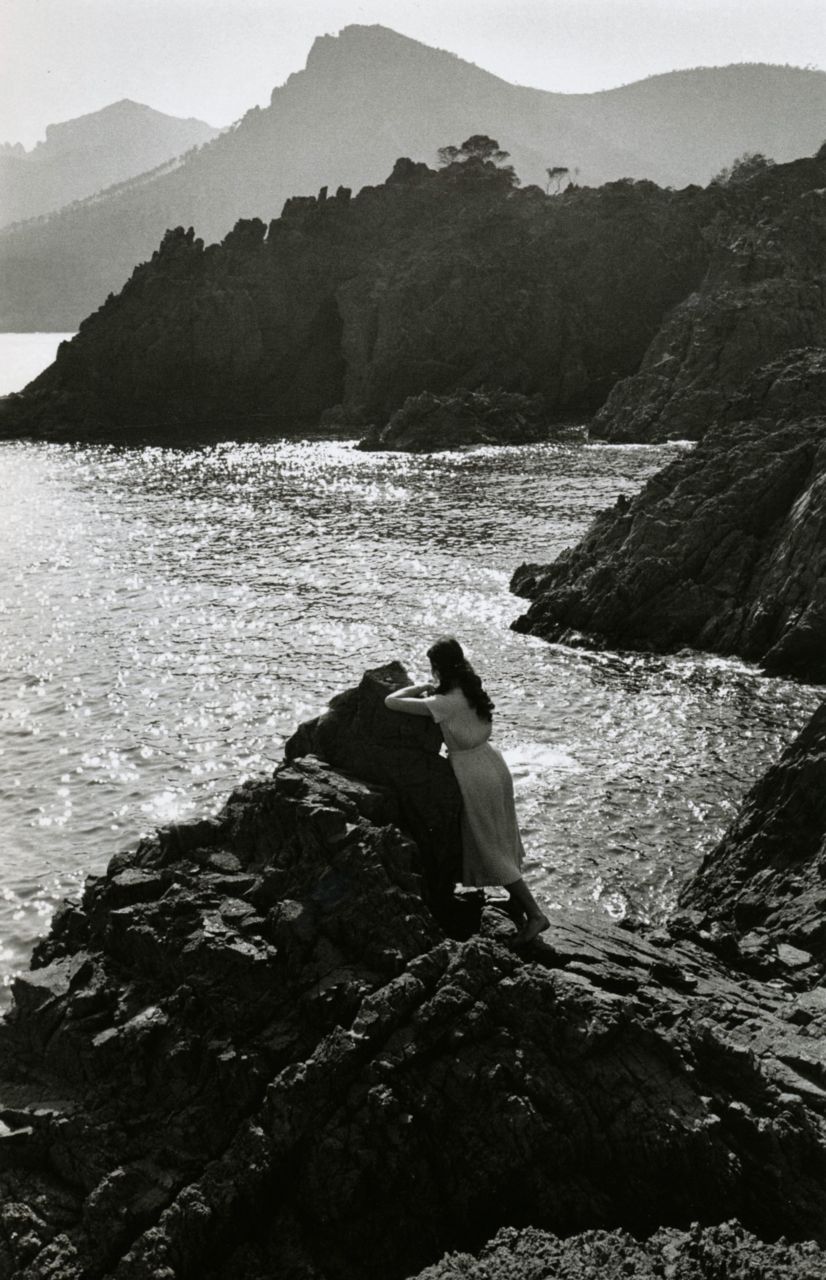
Photography by Édouard Boubat
It is
perhaps one of the most unfortunate laws of life that the most profound
components of our everyday existence often diminish into obscurity under the
aggresive torrent of volatile sensations that ceaselessly flood our lives in
this hurried age of technical imperialism, coming and going with the unabashed
face of a loud and tactless neighbour whom we came to tolerate out of
unavoidable necessity. It may seem that there are very few of those who still
pay attention to detail, who value delicacy over brash mannerism, who practice
the art of patience and actively learn to understand the complex language of
silence.
Silence is a teacher and a companion, a prayer and a communion – communion with that which is perhaps too grand to be captured by and squeezed into the imperfection, the finiteness of language. There is no music more captivating than that of silence suffusing the soul in its entirety until it becomes a notation sheet for the most eloquent of partitas. Silence is a fertile soil whose harvest reap only those most attuned to and appreciative of its appeasing presence.
There is a steady, revelatory force in silence, a force we are deeply afraid of these days – why else would we constantly take such great pains to quench it by drowning our lives in the empty clamour of shallow distractions, as though its presence spoke too eloquently, portrayed too vivid an image of ourselves we so often desperately strive to escape? Are we afraid that we might meet God Himself in those moments of quiet retreat, and that the naked intimacy and transparency of this encounter might render existence itself too uncomfortable, our own poverty too immediate, too insisting, too inescapable?
To be silent requires humility; the humility to listen, the humility to try to understand and to admit that one is still but a mere apprentice in the great art of living.
« Je suis heureux d’avoir trouvé ici un vieil homme digne. Et une demoiselle silencieuse. »
Vercors – Le silence de la mer
Photography by Édouard Boubat
In a poignant novella set in France in 1941 during German occupation, silence becomes the main protagonist and the ultimate vehicle to one of the subtles and most touching of rapprochements perhaps ever written in the history of literature. Published as a proof of patriotism and resistance of the suffering France, it made its author, Jean Bruller (writing under the pseudonym Vercors), famous practicaly overnight, creating a mystical halo of cult around this slender testimony of a quiet and detached observation.
Nous ne fermâmes jamais la porte à clef. Je ne suis pas sur que les raisons de cette abstention fussent très claires ni très pures. D’un accord tacite nous avions décidé, ma nièce et moi, de ne rien changer à notre vie, fût-ce le moindre détail : comme si l’officier n’existait pas ; comme s’il eût été un fantôme. Mais il se peut qu’un autre sentiment se mêlât dans mon coeur à cette volonté : je ne puis sans souffrir offenser un homme, fût-il mon ennemi.
Vercors – Le silence de la mer
When an aged gentleman and his young niece are forced to provide a lodging to a German officer, in an unspoken mutual agreement they decide to continue with their lives as if nothing ever changed, ignoring the young captain who also happens to be a musician-composer deeply enamoured with France’s rich culture. During the period of his stay, a series of meditative evening monologues unfolds in the deep stillness of the livingroom bathed in the subdued glow of a dying fire. These seemingly one-sided encounters repeat themselves in an almost identical pattern, yet always a new fragment of the officer’s patient presence manifests itself as he attempts over and over again to cross the wide bridge of silence dividing their respective shores. Suddenly his involuntary host is presented with a bugging dilemma – is Werner von Ebrennac an unwanted guest, the symbol of a foreign oppressor in the house of an enemy, or a man of a noble character forced by unhappy circumstances to stand opposed to the people of a country he feels sincere devotion and closeness towards?
— Bach… Il ne pouvait être qu’Allemand. Notre terre a ce caractère : ce caractère inhumain. Je veux dire : pas à la mesure de l’homme. Un silence, puis : — Cette musique-là, je l’aime, je l’admire, elle me comble, elle est en moi comme la présence de Dieu mais… Mais ce n’est pas la mienne. « Je veux faire, moi, une musique à la mesure de l’homme : cela aussi est un chemin pour atteindre la vérité. C’est mon chemin. Je n’en voudrais, je n’en pourrais suivre un autre. Cela, maintenant, je le sais. Je le sais tout à fait. Depuis quand ? Depuis que je vis ici. »
Vercors – Le silence de la mer
Photography by Édouard Boubat
Thus in the span of barely a few dozen of pages, silence comes to reign supreme over the unrest of three hearts united by fate. It becomes a narrator and a protagonist at the same time, providing space for questions that softly nudge the two opposing camps towards each other in a crescendo of spiritual unison. Is war truly a reason enough to suppress such a natural and effortless affinity as that between the German officer and his hosts, an affinity that has already planted seeds and grew almost imperceptible roots? Can true feeling of humanity and fellowship be preserved intact even amidst the most dire of circumstances that try to erase and deny those very qualities and sentiments that make the suffering on this Earth more bearable, the burdnes on our shoulders lighter?
Perhaps the most intriguing of traits of this solfège narrative is that it does not give any definite answers to the questions it inevitably raises. Le silence de la mer is a detached observation, music which is heard within and has no external outflow. It is a pensive meditation in the arms of a silence that suddenly takes on multiple interpretations, yet remains a solid coulisse, an everpresent comfort and a uniting element of those who subconsciously search for a path towards each other without being aware of it.
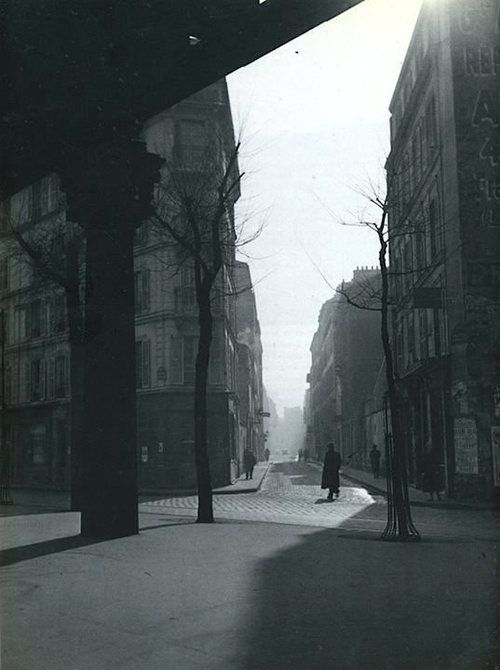
On apprend, souvent trop tard pour lui en parler, un épisode de sa vie qu’un proche vous a caché. Est-ce qu’il vous l’a vraiment caché ? Il l’a oublié, ou plutôt, avec le temps, il n’y pense plus. Ou, tout simplement, il ne trouve pas les mots.
Patrick Modiano – Pour que tu ne te perdes pas dans le quartier
Marcel Bovis photography
Memory is a sacred temple and a unique experience of human existence. Each imprint of lasting impact and due importance illuminates a candle in the soul and in the mind that burns slowly, shedding soft rays of light on those obscure corners that would otherwise be shrouded in darkness. Oftentimes it brings clarity by creating distance and disengagement, it mellows and refines the hard edges carved by pain. But memory just as well plays tricks of shadows, like the candle whose flimsy flickering is directed by occasional gusts of breath of our willingness – or rather the lack of it – to come to terms with events of the past that shaped our perception of the world, and consequently of ourselves. There is the twisting and turning, an anguished attempt to fit a pulsating fibre into a cold, lifeless template of rigid shape; there is a fine line between grasping and letting go, between that which is enlarged and that which remains in the blurried perception of distance.
There is no truth to be found in the past; by its very definition, past is deprived of the ability to provide the one relief that could bring comfort to the present; there is only the deepening dusk covered by a thin layer of mist closing in on the helpless figure searching for answers where they cannot be found.
C’était comme s’il allait lui dévoiler le secret de ses origines, toutes ces années du début de la vie que l’on a oubliées, sauf un détail qui remonte parfois des profondeurs, une rue que recouvre une voûte de feuillage, un parfum, un nom familier mais dont vous ne savez plus à qui il appartenait, un toboggan.
Patrick Modiano – Pour que tu ne te perdes pas dans le quartier
Marcel Bovis photography
Modiano’s prose is like a dance in a mist of time and memory with layers overlapping, thickening and unfolding again just to trickle like quicksand in small rivulets underneath one’s feet, sweeping away the present into the wistful secrecies of longing and a vain search for a past whose blotted-out face is hiding its contours under the veil of confused recollections.
To go down the memory lane is to forget and to be born again in the haze, in the mist and confusion, to start redefining fragments of the old self scattered along the way. And perhaps the lingering scent of autumn still remains even as the heart strives for a new bloom, perhaps the fallen leaves reposing in a resigned silence on the tear-soaked earth of things past still swirl and whisper when the mild wind of memory comes to glide his fingers through their auburn hair. But they also create space – a space to grow new circles of wisdom, a space for the heart to expand and regain, in the serenity of nostalgia, a new vision of the old.
But, you know, this is what is surprising : why does it so happen that all these statisticians, sages and lovers of humanity, when they reckon up human advantages invariably leave out one ?
Fyodor Dostoyevsky – Notes from the Underground
Having been taken by the deep spiritual force and the philosophical agonies of the formidable Russian classic The Karamazov Brothers, the natural sequel of my reading affairs somewhat conspicuously required that I take up more and more Dostoyevsky with the precaution of carefully planned intervals so that the strange shade of darkness with which his works are tinted should not lean too heavily on my mind already sufficiently inclined to brooding. After completing a Gambler-Karamazov-Crime&Punishment trio resounding in pointedly minor keys, I landed upon a writing that pulled me in a vertiginous spiral still deeper into the inner world of not merely a prolific writer, but also a prophetic, genius mind.
The Notes from the Underground is a tricky novel. It is so slender one might pass by it quickly without taking further notice had it not been so strongly layered with insights that reach even the far-off world of our culture, as visibly detached from 19th century Russia as it only could be, yet remaining connected to the past by ragged threads of repeated mistakes. It was written by Dostoyevsky as an answer to Nikolai Chernyshevsky’s enlightened self-interest and rational egoism that put an individual’s needs first and foremost on the ladder of coldly calculated priorities. This theory feverishly opposes the ideal of human altruism, and conditions it to the unwritten law that one should help one’s fellow man only if this demonstration of generous nobility intentionally promotes one’s own interests. The desired consequence of such string of action should then bring about a society that diligently operates upon the unwavering mechanisms of ratio.
What has made them conceive that man must want a rationally advantageous choice? What man wants is simply independent choice, whatever that independence may cost and wherever it may lead.
Fyodor Dostoyevsky – Notes from the Underground
Ilya Repin – Mikhail Glinka
The novel, divided into two parts, starts with a self-justifying confession of an anti-hero whose resentful, arrogant and nihilistic attitudes soak the pages like the scent of a repulsive odour. A retired civil servant, this embittered, unnamed narrator known to the reader simply as the Underground man writes in the monotonous span of his dismal days a monologue, or rather a diary, addressing equally unknown and invisible audience to justify and expand the factitious reality of his own inertia. Apparently, there are no redeeming qualities to be ascribed to his sluggish habits, yet his confession reveals a penetrating insight which his decayed mind is able to exercise with much brilliance and clarity upon the proposed subjects of a utopian society where continuous wellfare and the bountiful blessings of well-being for human spieces would be secured with one inevitable result – man’s loss of free will.
Shower upon him every earthly blessing, drown him in a sea of happiness, so that nothing but bubbles of bliss can be seen on the surface; give him economic prosperity, such that he should have nothing else to do but sleep, eat cakes and busy himself with the continuation of his species, and even then out of sheer ingratitude, sheer spite, man would play you some nasty trick. He would even risk his cakes and would deliberately desire the most fatal rubbish, the most uneconomical absurdity, simply to introduce into all this positive good sense his fatal fantastic element. It is just his fantastic dreams, his vulgar folly that he will desire to retain, simply in order to prove to himself as though that were so necessary that men still are men and not the keys of a piano, which the laws of nature threaten to control so completely that soon one will be able to desire nothing but by the calendar.
[…]
Good Heavens, gentlemen, what sort of free will is left when we come to tabulation and arithmetic, when it will all be a case of twice two make four. Twice two makes four without my will. As if free will meant that!
Fyodor Dostoyevsky – Notes from the Underground
Dostoyevsky’s vehement, unequivocal argument against such a straight-faced establishment of a society relies on the principle that man needs to validate his existence by exercising the freedom of choice regardless of the options proposed, and by that the author also wholeheartedly embraces the reality of suffering as an inherent and indelible part of the human experience – experience which is in fact of the uttermost importance provided one wants to grow and thrive.
Does not man, perhaps, love something besides well-being? Perhaps he is just as fond of suffering ? Perhaps suffering is just as great a benefit to him as well-being? Man is sometimes extraordinarily, passionately, in love with suffering, and that is a fact. There is no need to appeal to universal history to prove that; only ask yourself, if you are a man and have lived at all. As far as my personal opinion is concerned, to care only for well-being seems to me positively ill-bred.
Fyodor Dostoyevsky – Notes from the Underground
The second part of the novel lays bare all of the anti-hero’s spiteful qualities by putting him into a position of a saviour of a girl reduced to poverty and prostitution only to unmask his vile, mocking, twisted ways of psychological manipulation when he abruptly backs out with a sneer of the sunlit valley he so vividly painted for the pure-hearted and inexperienced girl.
The Notes from the Underground is considered to be one of the first existentialist novels to appear in the latter half of the 19th century, and one that turned out to be painfully prophetic when presented in the tragic light of the forthcoming October Revolution 1917, an event which inflicted deep wounds and left palpable traces across the ‘bent but not broken’ spines of numerous cultures and countries. It is not an easy read, and definitely one couldn’t find a trace of poetry in it – in its own dark and twisted way it is grimly humorous and viciously scoffing, full of self-loathing and contempt, but it contains such sparkling proofs of unsurpassed intellectual lucidity that it can serve even today as a torch amidst the complicated darkness of human chaos.
I do not want to learn the fine art of forgetting, for it leaves too bitter a taste in the wake of its momentary weightlessness.
I want to teach my heart to sing through tears, to be the calm boat adrift on the waves of stormy seas, to turn memory into lasting tenderness.
*diary entry, June 2019
Doucement ils viennent, seuls, et pourtant ensemble inséparables comme des rayons de lumière un peu trop éblouissante.
Leurs sourires sont des sourires des amants qui enfuient le temps, la mort dans les ruelles d’une cité vide avec la chanson du ciel portée dans leurs soupirs.
*à Prague, Octobre 2018
C’est un mystère d’avoir le ciel sous les pieds – un ciel tout nu comme un cœur qui essaie de s’exprimer.
Des nuages jouent une chansone d’automne si triste qu’il pleut de mélancolie sur les toits d’une âme qui s’éteint
Quel mystère, quelle folie, mon Dieu, d’avoir fait un cœur comme le mien.
Die Farbe hat mich. Ich brauche nicht nach ihr zu haschen. Sie hat mich für immer, ich weiß das. Das ist der glücklichen Stunde Sinn: ich und die Farbe sind eins. Ich bin Maler.
Paul Klee – Tagebuch
Bluenmythos, 1918
As an unwavering admirer of the Impressionist movement in the history of visual arts, I found myself a little bit perplexed when, through a strange string of accidents, I came across another biography of the Taschen edition, this time dedicated to a painter whose bold highlight of shape and colour I find nothing short of prophetic, yet I feel strangely detached from the trysts of rigid logic with high-flown imagination pervading his style.
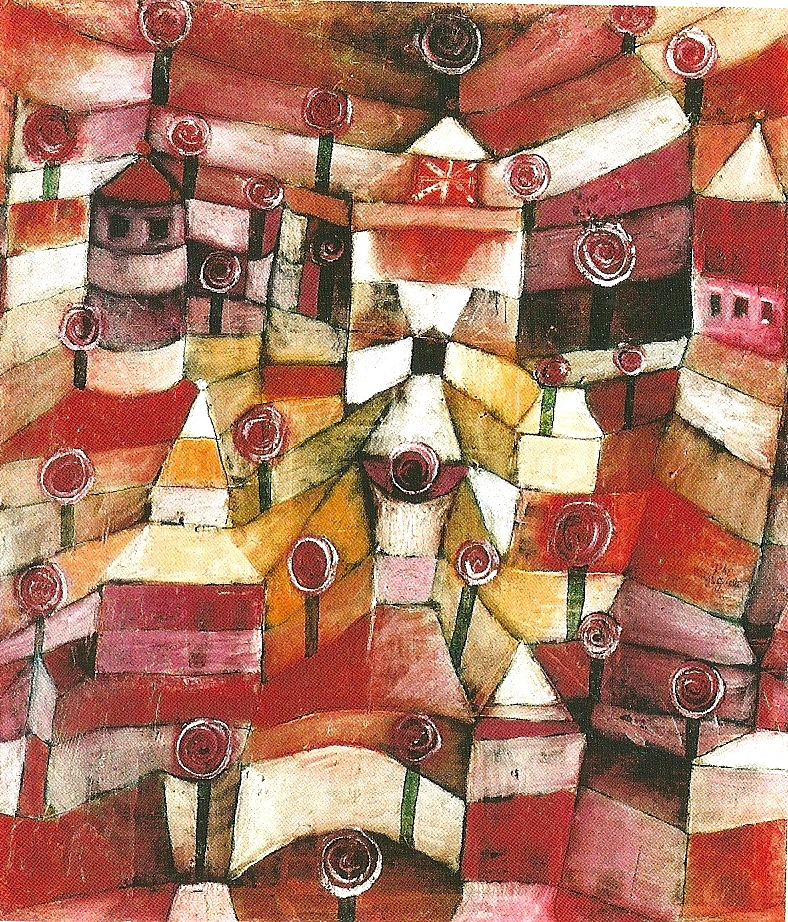
The artworks of Paul Klee make it almost impossible for one to square them into the boundaries of an art movement, and for me personally also hard to interpret, since very often I found myself struggling in trying to get hold of a secret clue that would unlock the meaning of a painting for me. More often than not I ended up with none, having to rely solely on my intuition and feeling to guide me through the splendid maze of his secrecies and allusions.
Die Farbe ist erstens Qualität. Zweitens ist sie Gewicht, denn sie hat nicht nur einen Farbwert, sondern auch einen Helligkeitswert. Drittens ist sie auch noch Maß, denn sie hat außer den vorigen Werten noch ihre Grenzen, ihren Umfang, ihre Ausdehnung, ihr Meßbares. Das Helldunkel ist erstens Gewicht, und in seiner Ausdehnung bzw. Begrenzung ist es zweitens Maß. Die Linie aber ist nur Maß.
Paul Klee – Vortrag, Januar 1924
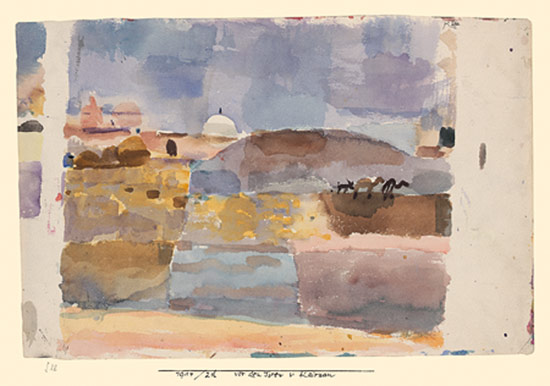
Despite the occasional inconsistency of delightful exploration I saw myself subjected to, one pronounced trait of Klee’s paintings was fully capable of wringing peals of admiration from me, that being the artist’s audacious exertion of his natural propensity for colour and its experimental usage over all of his artwork, which sometimes reminded me of the timbres of sound one is able to extract with much lyricism from a musical instrument.
Vor den Toren von Kairouan, 1914
Considering Klee’s initial indecision when it came to choosing a life path between music and the visual arts, it is only natural that the one should, to a degree, transmute into the other, thus finding its voice in colour instead of a music hall.
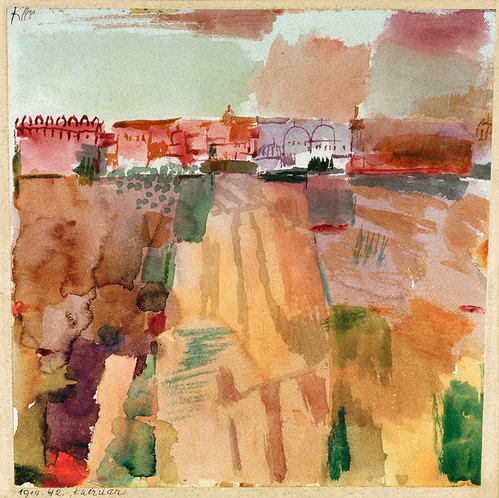
Kairouan, 1914
The demonstration of his amazing sensitivity for colour I consider to be his Kairouan aquarelles, created during a visit in Tunisia in 1914. The lightness and vibrancy of the shades applied say much of his exploration of light and its play upon the city.
The return from his voyage saw Klee’s subsequent drifting off into the lands of the abstract, where nature and objects of solidity lose rapidly in their importance, and a heavy emphasis on shape gains the forefront in the artist’s work instead. While the application of colour builds a steady tension with each completed artwork like a bridge across the gulf between his early works and his blooming maturity, the land of the abstract was precisely where I had to start fishing for clues and innuendos that would propel me to unveil the chromatic mystery of Klee’s paintings, pastels and aquarelles.
Kunst gibt nich das Sichtbare wieder, sondern macht sichtbar. Das Wesen der Graphik verführt leicht und mit Recht zur Abstraktion. Schemen- und Märchenhaftigkeit des imaginären Charakters ist gegeben und äußert sich zugleich mit großer Präzision. Je reiner die graphische Arbeit, das heißt, je mehr Gewicht auf die der graphischen Darstellung zugrunde liegenden Formelemente gelegt ist, desto mangelhafter die Rüstung zur realistischen Darstellung sichtbarer Dinge.
Paul Klee – Schöpferische Konfession, 1920
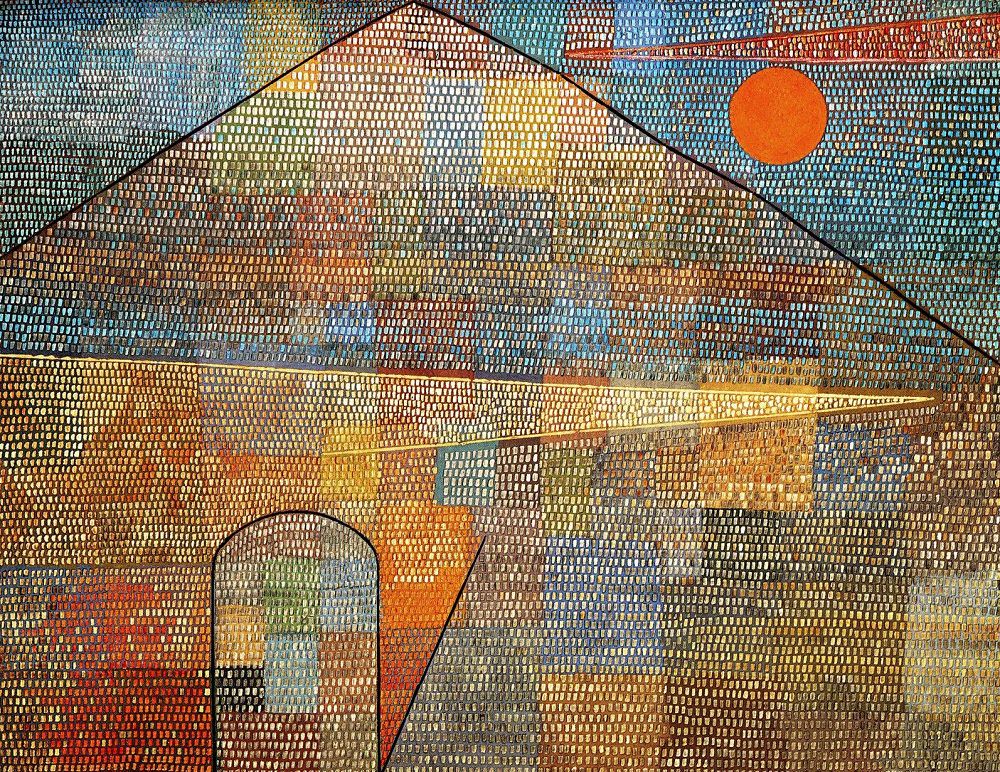
One of my definite favourites was Ad Parnassum, representing the peak of Klee’s artistic powers influenced by his travels to Egypt in 1928, and this mosaic closely following the effervescent style of pointillism aptly illustrates and summarizes what I admire about Klee’s work most – a strong sense of colour boldly underlined by an inventiveness of shape, creating a unique experiment that eventually grasps one by the senses, inviting into the discovery of a highly individualistic expression.
Sie haben das Licht in die Turmstube gerettet. In den Augen
 haben sie’s mitgebracht, in den nichtgesagten Worten, in dem
 dunkeln Schoß ihrer Sehnsucht. Und es entfaltet sich jetzt. Sie
 leuchten sich ins Gesicht mit ihrem Lächeln. Sie betasten sich
 wie Blinde, die sich erkennen; sie packen sich wie Kinder, die
 Angst haben vor der Nacht. Aber sie fürchten sich nicht. Sie
 wissen nichts von gestern und denken nicht an ein morgen.
 Die Zeit ist eingestürzt. Und sie blühn beide aus den Trümmern.
 Sie fragen einander nicht,
 weder Er: „Dein Gemahl?“
 noch sie „wie heißt du — ?“, sie haben sich ja gefunden,
 um sich neue Namen zu geben, alle die ihnen einfallen aus
 Geschichten, aus Träumen, in hundert Sprachen —

- Rainer Maria Rilke - Die Weise von Liebe und Tod
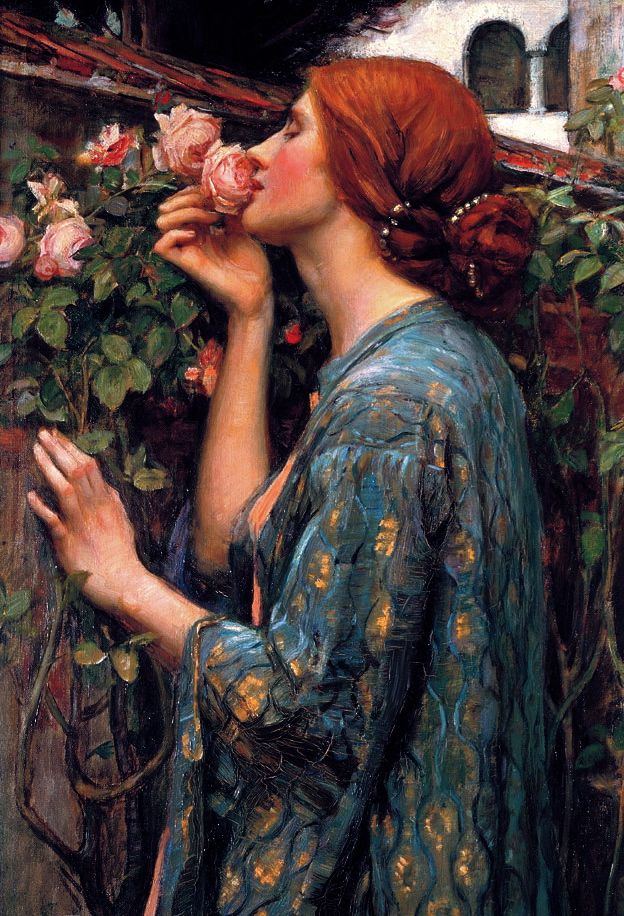
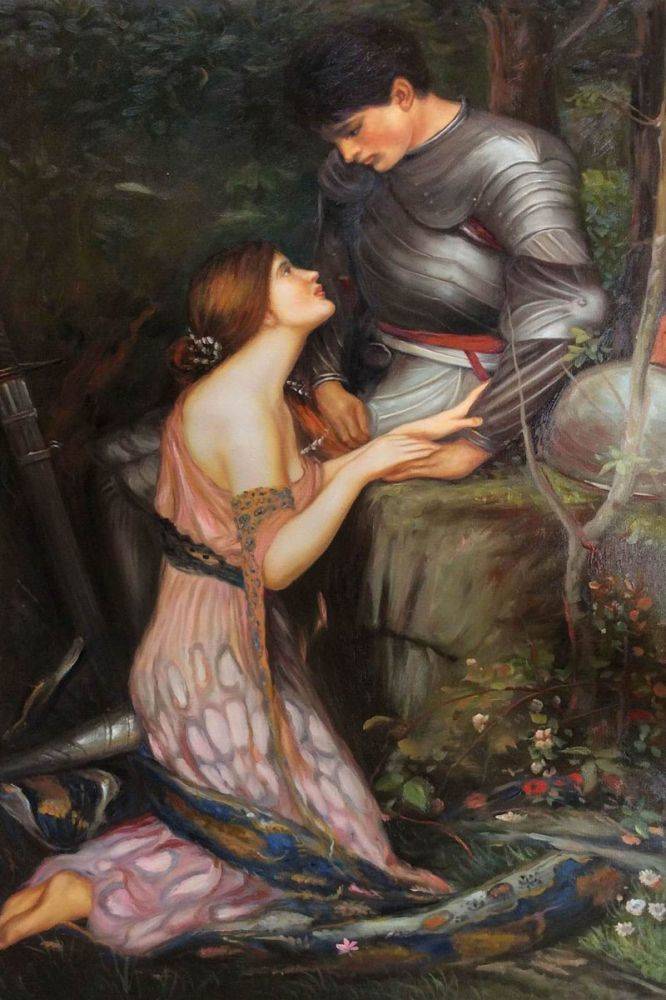
A bright incandescence of flames heats up the mute stillness of the overcast horizon, resembling a flash of lightning against an ebony-laden sky. It was only yesterday that Mother sent him off with a loving kiss and a tear that turn into bright crystal, off into the great world to chase the enemy and bear the flag of honour. Eighteen, and so fresh, like the petal of a rose received for protection.
John William Waterhouse – Lamia
I will come back, Mother.
So he promised, yet he never did, crossing the lands of valour in the feverish haze of his early hopes. And in that one brief night of forgetfulness, weaving itself about him in shapes of softness and radiance, he suddenly learned the language of giving. But how, with the flames blazing high, and the cries of the enemy reverberating through the night’s air still trembling with the delicacy of their touch, could he possibly retain this frail key to existence?
We must part, he whispers, and his words fall into her eyes like light into the dark depths of cathedrals, illuminating the vaulted lace of the nave as she watches him leave.
Towards the svelte paths of his home he never turns, but cries out softly in pain, falling to the blood-soaked ground with the burning flag in his tight grasp.
Let my death, too, Mother, be simply another prayer, while an old woman weeps for me on my grave.
*a short meditation on Rainer Maria Rilke’s Die Weise von Liebe und Tod des Cornets Christoph Rilke
The glow of the stones warmed Lily’s veins like wine. More completely than any other expression of wealth they symbolized the life she longed to lead, the life of fastidious aloofness and refinement in which every detail should have the finish of a jewel, and the whole form a harmonious setting to her own jewel-like rareness.
Edith Wharton – The House of Mirth
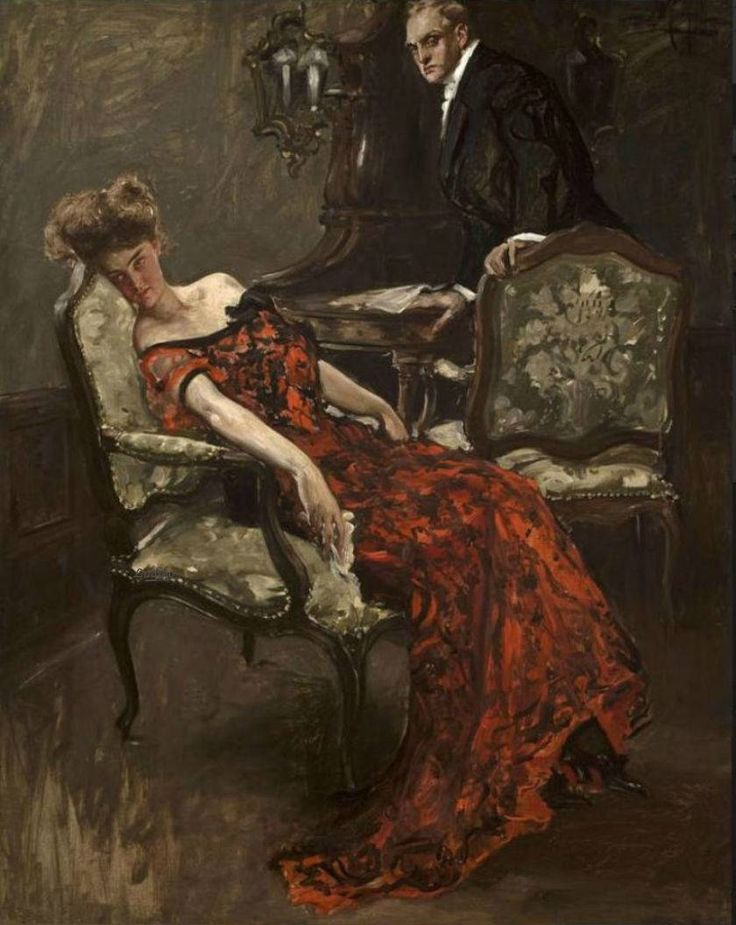
“I shall always tell you,” her aunt answered, “whenever I see you taking what seems to me too much liberty.” “Pray do; but I don’t say I shall always think your remonstrance just.” “Very likely not. You’re too fond of your own ways.” “Yes, I think I’m very fond of them. But I always want to know the things one shouldn’t do.” “So as to do them?” asked her aunt. “So as to choose,” said Isabel.
Henry James – The Portrait of a Lady
Albert Beck Wenzell
A common thread runs through the long list of works of world literature now established securely with the label of a classic, effectively joining them into a string of brilliant minds that successively climbed the ladder of fame and left their mark of influence. It is the mirror which they courageously put before a bewildered audience of their era, becoming a reflection of their habits and morals in the most cohesive, incisive and shameless of ways so as to paint a vivid portrayal of an age that had its sway in the precarious currents of history.
The accolades of a keen wit combined with insight and a piercing eye could not possibly be distributed more readily and more deservedly when it comes to two magnificent minds of the 19th century whose virtuosity of pen and accuracy of observation reconstructed in the greatest minutiae the dazzling world of the Gilded Age (drawing a parallel line to the European La Belle Époque), spreading a force of impact and meaning as far as the shores of the 21st century when the voices of Edith Wharton and Henry James still sound far down the winding lanes of our brash and cynical times with much the same clarity and resonance as those 150 years ago.
Having been swept off of my feet by the beauty and sophistication of Edith Wharton’s exquisite command of language already a long time ago, it has been only a few months since I finally succeeded in adding also her faithful friend and fellow writer of the same epoch, Henry James, to the reading schedule, and to say that I was delighted would definitely be a huge understatement of the admiration and awe I felt when reading James’s highly intellectual prose which lacked none of Wharton’s shrewdness and intricacy embalmed in soft layers of poetic tendencies, thus making the utmost demands on the full presence and alertness of one’s brain while also providing the reader with a delight of a truly unique kind.
If I were to stress and vindicate the importance of the appeal which the voluminous work of these two genius minds engenders, I would certainly delve deeper into the two dominant facets presented by Wharton and James with such elegance that one almost forgets what a genuine tragedy creeps beneath the delicious veneer of their lustrous writing skills – marriage and society.
Albert Beck Wenzell
The world of James’s and Wharton’s characters can be without a doubt likened to a gilded cage with delicately shaped, iron-tight bars. It is a habitat of a society that doesn’t pardon a step out of the rigid, widely accepted norms; a society where money is the Bible and reputation the Altar of Holiness. Marriage is limited to a mutually advantageous market-trade business where sincerity counts for little and love is an unforgivable sin leading to eternal damnation, a superfluous weakness. This world is a guillotine made by the proper hands of its victim, a theatre with a polished mise-en-scène designed to be merely admired and longed for, lacking any logic of purpose. Everything has the air of a play that starts as a light-hearted farce only to end in a sudden twist of sorrowful bitterness. An ever repeating scenario unfolds in front of the eyes of the bedazzled spectator – the actors know they are playing their own tragedy, but putting on a formidable performance ultimately becomes more important than the inevitable consequences of it. They are absorbed in the brilliancy of their dialogue without the need to think about its meaning, they slide on the surface and carefully avoid probing the depth.
In such a world, a woman’s worth is derived from the loveliness of her face and the outward gracefulness of her manners, from her stainless reputation artfully masking an artificially constructed lie. The impeccable trimming of her dress accordingly dictates the corset-tight routine of her life – a life where every detail, every movement, every word, breath, glance and gesture has to fit with the same punctuality as the placement of the delicate lace on her fashionable gown, has to be measured with the coup d‘œil of a skilled general arranging his forces for a tough battle. Eyes are everywhere – watching, prying, unforgiving, waiting eagerly for the slightest sign of faltering to turn into famished hyenas ready to tear their prey into pieces and adorn themselves with its remains.
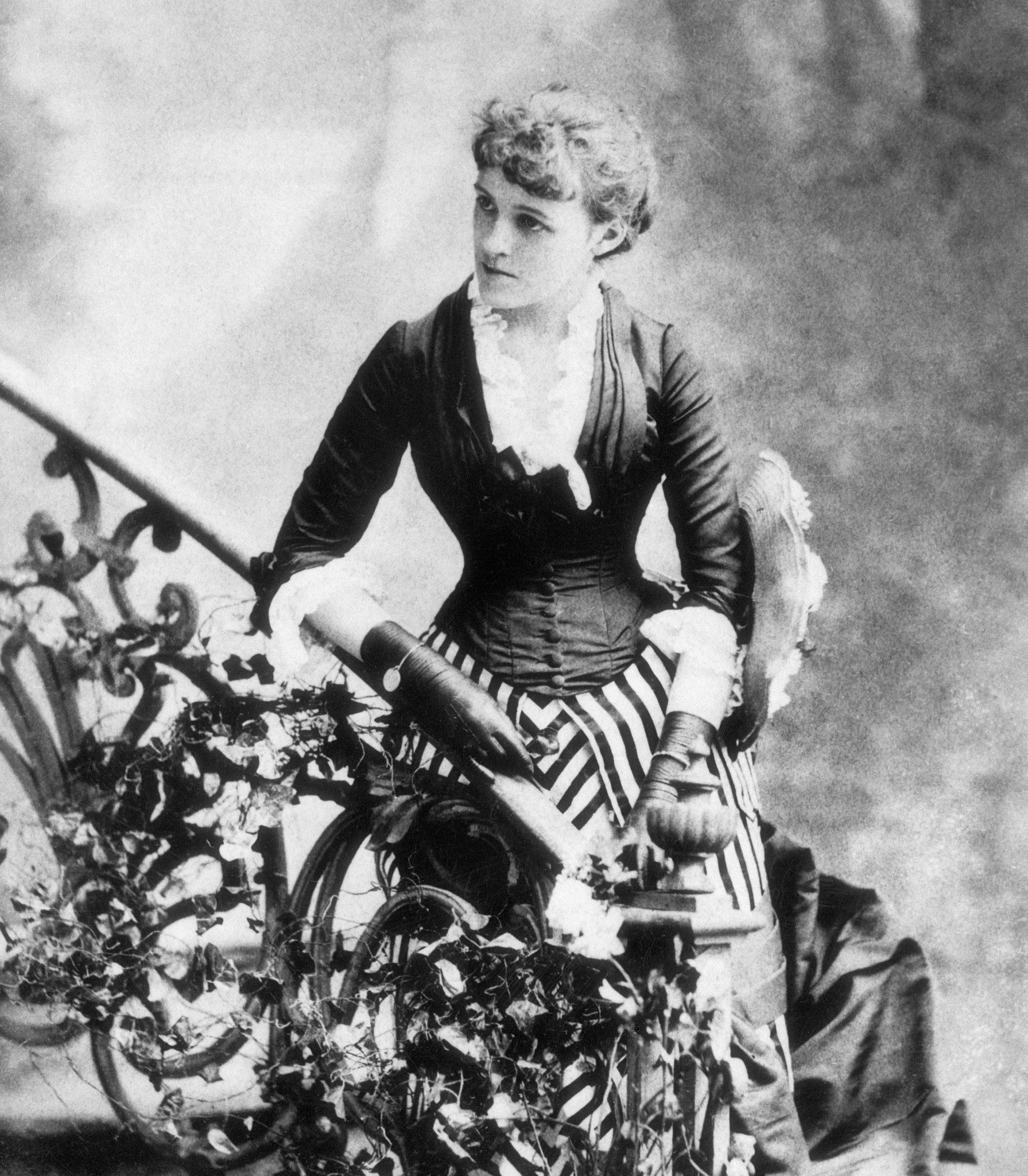
Edith Wharton
Reading Edith Wharton‘s three major novels – The House of Mirth, The Custom of the Country and The Age of Innocence (the latter of which brought the authoress a Pulitzer Prize) – is akin to taking a long walk down the Fifth Avenue in the dim gaslight of evening street lamps with the rattle of carriages and the pearly laughter of the ladies haunting the place like a trapped ghost. Her wealthy high society of Old New York is depicted with a grim charm that leaves one spell-bound and horrified at the same time due to the sparkling beauty of the form mixed in equal doses with the cold-blooded tragedy of the content.
The main target of Wharton’s penetrating critique becomes, unsurprisingly, the position of a woman within a society, and the dilemma of a marriage of convention as opposed to a marriage of love. The questions raised by Wharton’s prose I find not merely intriguing, but of most acute importance to the reader of the present day when the steady decline in numbers of married couples is influenced by the very same – if not even more marked – cynicism and skepticism as that reigning supreme during Wharton’s times, reducing the institution of marriage to a business affair that had little to do with feelings, let alone a higher, spiritual purpose.
Another trait typical to Wharton’s characters is a miserable fight against their own instincts and the prejudice of their world with which they retain a poisonous love-hate relationship, a world which holds them captive. The chains are of scented satin and silk, and its vulgar beauty sucks their soul and life invisibly out of them while giving them the impression of having the best time of their lives. They are like flies that landed in a bowl full of honey, and a sweet, slow, suffocating death awaits them. That is the utmost tragedy of their superficial, glittery lives – they love money, and they eventually drown in its vast sea, or end up washed upon the shores of poverty and emptiness.
Wharton’s characters are the fine contours that shape this gilded cage, so masterfully and ironically depicted in her novels. They passionately long for a different life, but their personal tragedy lies in their incapability to live anywhere outside a stucco decorated drawing room that reflects their own glamour. They are simply not able to adapt and come to terms with anything less than the standard with which they were once inoculated. When finding themselves anywhere beyond the stylish circle of their world of meretricious luxury, they turn into a fish removed from its natural environment nervously gasping for air, and in the end they decide that the vision of a change is more satisfactory than the dangerous risks they would have to undertake in order to turn it into reality.
It is usually too late when they realize that the demon of material possession cannot satisfy their hunger for the depth of a meaningful and useful life, or, as in The Custom of the Country, which I found the most blood-chilling of all three novels and almost too heart-breaking to finish, they do not arrive at that revelation at all, even after causing a tremendous collateral damage.
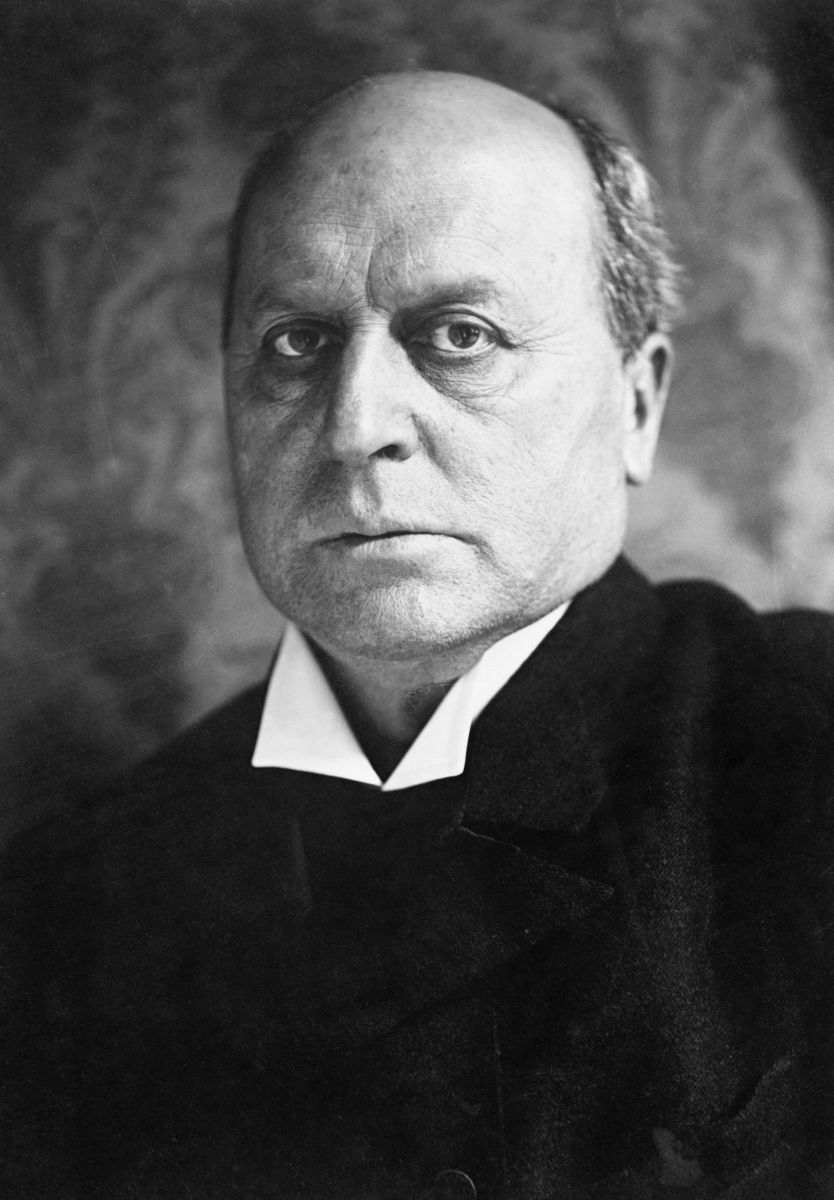
Henry James
In the case of Henry James‘s awe-inspiring portrait of words – The Portrait of a Lady, a wholly different polemics unfolds amidst the set of common themes of the very same milieu which Wharton with a tasteful irony deprived of its illusional innocence. In this timeless classic, James decided to take a close look at a life of a young, intelligent woman endowed with purpose, ideas and ambition, and scrutinize it under the magnifying glass of independence and inheritance that hugely influence all the major decisions of the passionate and high-spirited Isabel Archer.
Themes highly relevant for the confused age we live in pervade James’s story through and through. Where Wharton’s heroines blatantly hunt for a rich husband to use who will secure them with a position within the poisonous circle of their equally rich acquaintances, in James’s novel we witness repeatedly how Isabel Archer stubbornly adheres to her idea of perfect independence to the point of being so blinded by its glow that she desperately gropes about in an attempt to steady her balance, and in that moment of perplexed sensations she grabs the very thing which will prove to be her finest undoing. Her initial fear of the imposing burdens brought along by the convention of commitment and love, and her outright refusal of a devoted man’s heart which comes in a recurrent pattern on multiple occasions eventually lead her to a place where she is forced to admit, though still but unwillingly through the lens of a wounded pride, that she traded permanence, stability, safety and loyalty for the exhilarating taste of the new, exotic and momentary, and she sees her young life running through her fingers in trickles of treacherous quicksand.
One does not have to look far for evidence how the progressive destruction of family is bringing about the inevitable decay of society as a whole since its most essential nucleus existing and supporting it from times immemorable is being dismantled and scorned. It is why I think that all the themes presented by James and Wharton in their masterworks – the social problems and the cobweb of interpersonal relationships, the true, hideous face of material craze and the importance of a marriage built upon mutual sincerity, loyalty and devotion – are as crucial for the present reader as ever before, providing an unparalleled clarity of insight and great wisdom that is offered to be applied as a remedy to the malady of cynicism that burrowed its claws into the neck of our times, if only we were willing enough to take responsibility and make use of it.
« L’œuvre de Rodin est pareille à un monde immense, et son génie évoque l’idée d’une force naturelle dont la puissance créatrice emprunte, pour se manifester, tous les verbes d’art. »
Roger Marx, 1907
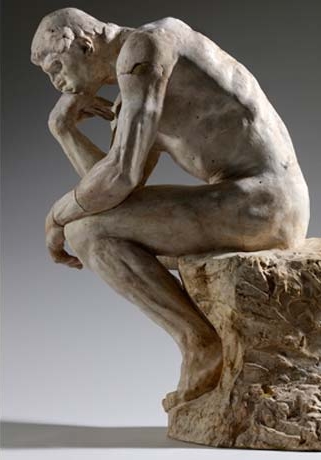
Elemental force palpitates in those veins of marble, veins of bronze. The wondering eyes are reposed and quiet, fixing their blind stare at the white stucco and the polished mirrors covering the walls as though searching for a reflection of yesterday, but no trace of agitation, no blemish of regret blurs now their intent look, for they are at peace. Time itself stands still in motionless trepidation while they breathe – ever so softly, holding silent vigil over each other’s heartbeat locked within a chest of stone.
Auguste Rodin – Le Penseur, 1882
A man’s hands once touched the rough surface with tenderness, and poetry was carved in stone, music written in clay. The labour of all creation begins in dirt and dust and tears; and it is true that small things grow and achieve their splendour only under the eyes of love.
His touch breathed life into the whispering stone, and they rose one after the other – with shy hesitation at first, gaining courage as each stroke of chisel made the contours swell and stir, moulding a ladnscape of longing and emotion halted in time. And there he was, John the Baptist preaching to Dante’s Inferno; Adam banished from Eden with Eve hiding her face in anguish of shame and misery; and the Thinker who was a poet before the world became too heavy, too soaked with grief and questions.
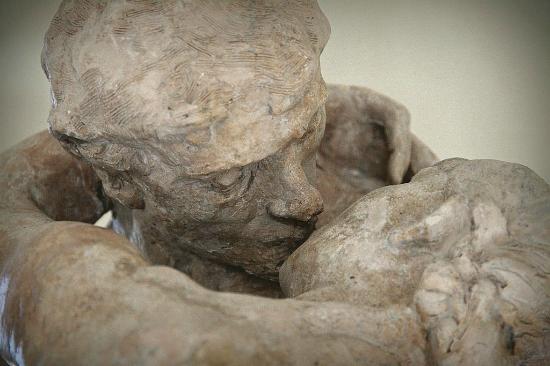
Auguste Rodin – Le Baiser, 1882
But grief would never have come, had he been deprived of his companion, the one who always precedes him; for that is the law of life – one must always make place for that which comes next until the cycle is completed; life is never linear. How lucky they are, the Lovers, to be so frozen in their moment of exaltation before the tremulous ache of parting begins; their embrace a shelter of warmth where they are forever discovering the satin folds of each other’s lips until they both forget – in the humility of complete surrender – where the one begins and the other ends.
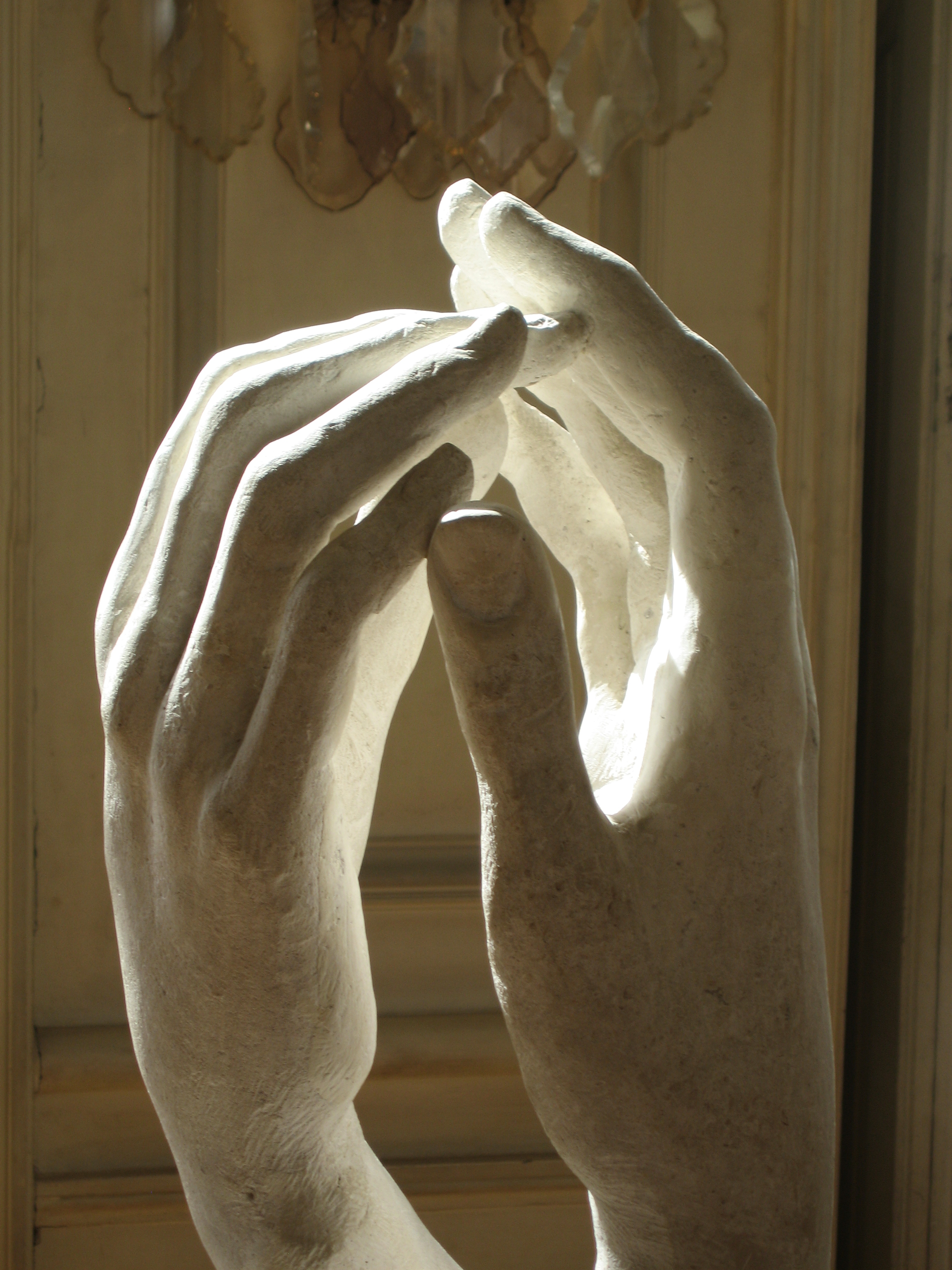
Auguste Rodin – La Cathédrale, 1908
Two temples entwined in a prayer, like fingertips barely touching in timid reverence, and a Cathedral was built, born of the mélange of suffering and sweetness that distance entails. Distance between two hands yearning to fuse, distance between the prayer and the answer. But distance allows for space and air breathing gently in that void, supporting the Cathedral like vaulted arches so that it may stand through fires and centuries in a sigh of quiet perseverance.
And perhaps they are already one, do not exist, in fact, but within each other, like the sculptor and his work.
He gave birth with a thought and a pair of hands, but they are not reason enough to sustain his art, they are not his legacy to posterity. For what is a thought? A thought is selfish, living a life of its own; it swells, it spirals, ascends, and suddenly vanishes in an opaque veil, leaving no trace of yesterday and no hope for tomorrow. No, do not give me a thought, for it may perish only too easily, and it is permanence that art requires. There must be a higher constant, a solid rock upon which a new life may begin.
Let me say out loud then, in the solitude of my mornings and the loneliness of my nights, that which he too wanted to say with his marble and his stone, that which he wanted to express even through faces contorted with anguish and pain: I love – therefore I am.
*hommage à Auguste Rodin, écrit au Musée Rodin, Juin 2019





 L'art de subtilité