Mélodie comme une structure intégrante, mélodie comme une réflexion intime

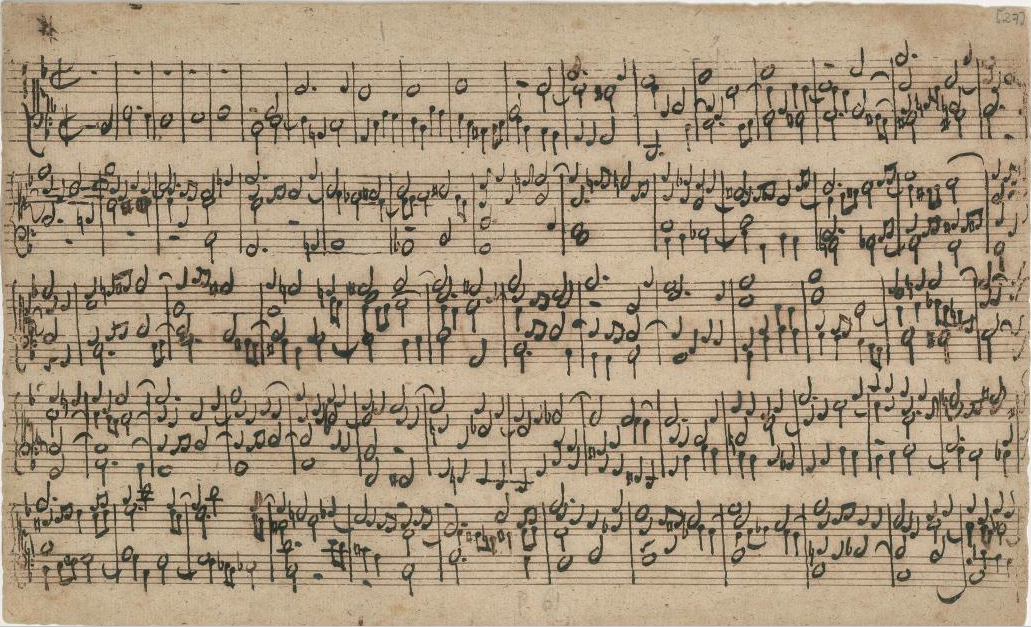
Johann Sebastian Bach, L’Art de la fugue, Contrepoint 14 (inachevé), manuscrit autographe (1749), Staatsbibliothek zu Berlin

“Criez de joie pour le Seigneur, vous qui lui obéissez. Pour ceux qui ont le coeur pur, il est bon de chanter sa louange. Remerciez le Seigneur avec la cithare, jouez pour lui sur la harpe à dix cordes. Chantez pour lui un chant nouveau, rythmez bien vos cris de joie avec tous vos intruments.” Voilà comme l’un de plus grands poètes et rois de l’histoire chante et professe, avec une passion presque bouleversante, son amour intime et profond pour son Dieu. La musique prend une place prépondérante dans les Psaumes de David, suscitant et élevant la conception de la prière vers une dimension entièrement nouvelle et différente où l’intégration de l’Absolu ne se passe que grâce à la musique.

J’ai toujours pensé que l’expérience humaine avec cet unique art de la communication qui est la musique fût l’une de plus révélatrices, même métaphysiques, qu’on peut éprouver – pas seulement à cause de la force et la douceur de l’absorption dans le moment quand on l’écoute, entrant un univers tout imprévu et mystérieux, mais aussi à cause de se trouver comme un témoin de la réunion de toutes les parties les plus essentielles qui constituent la vie même.

Ayant croisée une écriture exquise sur l’évolution de la mélodie et sa signification au fil des siècles dans une collection d’essais de Milan Kundera, Les testaments trahis, elle m’a fait réflechir sur cette diversité que la mélodie offre – parfois cachée dans la structure solide du contrepoint comme un pilier de stabilité d’un morceau tout en ne revendiquant pas une place strictement individuelle et dominante dans le cadre de la composition, parfois souple comme l’air, respirant et s’élevant au-dessus des autres voix, guidant notre âme dans un temple délicat de l’introspection tranquille.

Il me semble que l’art de la mélodie, jusqu’à Bach, gardera ce caractère que lui ont imprimé les premiers polyphonistes. J’écoute l’adagio du concerto de Bach pour violon en mi majeur : comme une sorte de cantus firmus, l’orchestre (les violencelles) joue un thème très simple, facilement mémorisable et qui se répète maintes fois, tandis que la mélodie du violon (et c’est là que se concerne le défi mélodique du compositeur) plane au-dessus, incomparablement plus longue, plus changeante, plus riche que cantus firmus d’orchestre (auquel elle est pourtant subordonné), belle, envoûtante mais insaisissable, immémorisable, et pour nous, enfants de la deuxième mi-temps, sublimement archaïque.

La situation change à l’aube du classicisme. La composition perd son caratère polyphonique ; dans la sonorité des harmonies d’accompagnement, l’autonomie des différentes voix particulières se perd, et elle se perd d’autant plus que la grande nouveauté de la deuxième mi-temps, l’orchestre symphonique et sa pâte sonore, gagne de l’importance ; la mélodie, qui était “secondaire”, “subordonnée”, devient l’idée première de la composition et domine la structure musicale qui s’est d’ailleurs transformée entièrement.

Alors change aussi le caratère de la mélodie : ce n’est plus cette longue ligne qui traverse tout le morceau ; elle est réductible à une formule de quelques mesures, formule très expressive, concentrée, donc facilement mémorisable, capable de saisir (ou de provoquer) une émotion immédiate (s’impose ainsi à la musique, plus que jamais, une grande tâche sémantique : capter et “définir” musicalement toutes les émotions et leurs nuances). Voilà pourquoi le public applique le terme de “grand mélodiste” aux compositeurs de la deuxième mi-temps, à un Mozart, à un Chopin, mais rarement à Bach ou à Vivaldi et encore moins à Josquin des Prés ou à Palestrina : l’idée courante aujourd’hui de ce qu’est la mélodie (de ce qu’est la belle mélodie) a été formée par l’esthétique née avec le classicisme.

Pourtant, il n’est pas vrai que Bach soit moins mélodique que Mozart ; seulement, sa mélodie est différente. L’Art de la fugue : le thème fameux est ce le noyau à partir duquel (comme l’a dit Schönberg) le tout est créé ; mais là n’est pas le trésor mélodique de L’Art de la fugue ; il est dans toutes ces mélodies qui s’élèvent de ce thème, et font son contrepoint. J’aime beaucoup l’orchestration et l’interprétation de Hermann Scherchen ; par exemple, la quatrième fugue simple ; il la fait jouer deux fois plus lentement qu’il n’est coutume (Bach n’a pas prescrit les tempi) ; d’emblée, dans cette lenteur, toute l’insoupçonnée beauté mélodique se dévoile. Cette remélodisation de Bach n’a rien à voir avec une romantisation (pas de rubato, pas d’accords ajoutés, chez Scherchen) ; ce que j’entends, c’est la mélodie (un enchevêtrement de mélodies) qui m’ensorcelle par son ineffable sérénité. Impossible de l’entendre sans grande émotion. Mais c’est une émotion essentiellement différente de celle éveillée par un nocturne de Chopin.

Comme si, derrière l’art de la mélodie, deux intentionnalités possibles, opposées l’une à l’autre, se cachaient : comme si une fugue de Bach, en nous faisant contempler une beauté extrasubjective de l’être, voulait nous faire oublier nos états d’âme, nos passions et chagrins, nous-mêmes ; et, au contraire, comme si la mélodie romantique voulait nous faire plonger dans nous-mêmes, nous faire ressentir notre moi avec une terrible intensité et nous faire oublier tout ce qui se trouve en dehors.

Milan Kundera – Les testaments trahis
The lost art of tenderness and grief

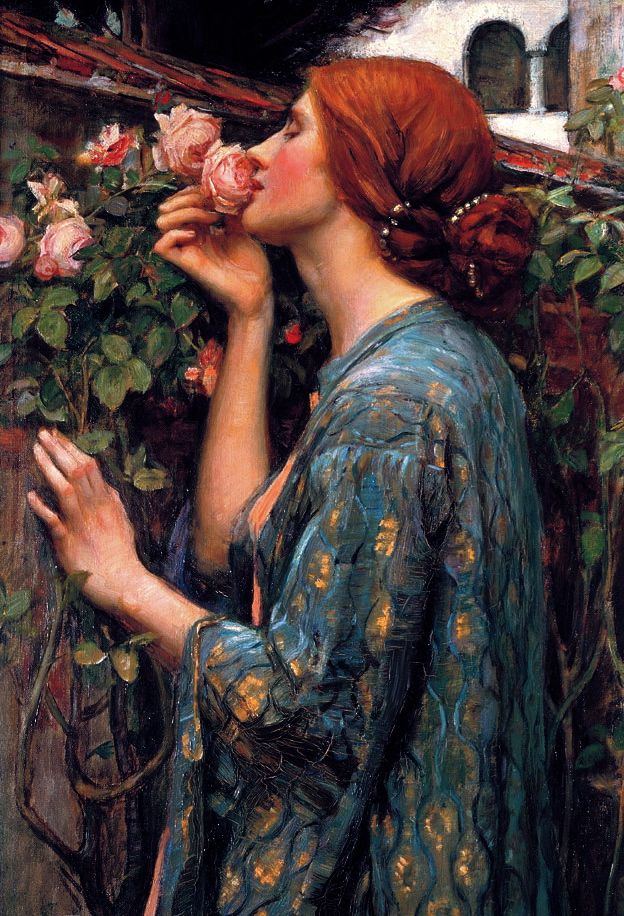
John William Waterhouse – The Soul of the Rose

Il y a longtemps que je t’aime
jamais je ne t’oublierai

A la claire fontaine

I need all the time I have and a thousand times more than all the time I have and most of all I’d like to have all the time there is just for you, for thinking about you, for breathing in you.

Franz Kafka to Milena Jesenská – Letters to Milena

‘Long have I loved you, never will I forget you.’ The words of the well-known French chanson fall like a soft rain while retaining all the solemnity of a promise. There is a deeply touching element to its extraordinary simplicity, to the melancholy lilting of its melody. The chanson is a tender plea like a child with outstretched hands waiting for its mother’s caressing embrace. In the very same way it is direct and unassuming, humbled before the cathartic presence of a quiet grief that resembles a beaten rose – a glistening raindrop gently kissing the velvet folds of a petal, bending the head of the flower towards the ground by its weight, yet at the same time enhancing the contours of the rose’s beauty like no ray of luminescence could. Il y a longtemps que je t’aime, jamais je ne t’oublierai. I know of no words of love, of no promise more simple and straightforward, trembling in an echo of a tender memory.

I made the wonderful discovery of A la claire fontaine while watching the movie adaptation of William Somerset Maugham’s novella The Painted Veil which I read a few years ago. I remember being profoundly moved by the delicate chanson from the very first moment, but it was not until a few years later that I came to appreciate in a very personal way the numerous palpable dimensions of feeling and beauty hidden within this seemingly simple poem.

Very often we are reluctant and unwilling to address and acknowledge the presence of grief in our lives, trying to smooth it over like an uncomfortable crease on a silk cloth even though its stabbing, paralysing and overwhelming insistence lurks in the shadow of our footsteps like an abandoned lover. It took me a long time to understand there is no shame in grief, in tears; just the contrary – there is sacredness in those words that are too weighty to be expressed by human language. Grief – that is Abraham taking his beloved son Isaac up Mount Moriah, in an act of unquestioning obedience and trust, to sacrifice him to the One who promised to bless him with fruitful offspring. Grief – that is Christ shedding warm tears in front of Lazarus’s tomb, lying in freezing solitude on the parched ground of the Ghetsemani garden in the sombre shade of olive trees, dying on the cross with a piercing cry that never ceases to shake my whole being – Eli, Eli lama sabachthani. Father, why hast thou forsaken me? Grief – that is the profound loneliness of the Woman under the cross watching her only son being taken into the cold arms of death; it is the river of neverending sorrow and tenderness of La Pietà.

There is sacredness in grief which invites us into a space of halted time and breath, like the delicate chanson does – come, sit by the banks of the river, and let your tears flow like flowerbuds down the stream.

Il y a longtemps que je t’aime, jamais je ne t’oublierai.

There is no time or distance that can heal grief; it can only be acknowledged and accepted as an everyday guest until it becomes our most intimate companion. Then we can truly understand the powerful presence of all its facets – tenderness and gratitude most importantly.

Tenderness and gratitude – those, for me, are most intimately woven and presented in Schubert’s Impromptu in G flat major with a languorous melodic sigh carrying the principal voice through a vast land of luminous, gentle sadness. The very same luminosity can be found only in the eyes of a dying person who peacefully parts with the finite aspect of existence, eyes lovingly caressing the contours of things once so familiar while waiting for the transition to the unknown. That moment of accepting, abandoning, and slowly moving forward, of crossing and transition – that is the land of sadness borne on the fragile breath of Schubert’s supple melodic lines.

The journey can be long and very tiring, there is no doubt about that; but side by side with that loneliness looming large over one’s head like a branch of an old, weather-beaten tree, there is the comfort of its shade, the richness of its autumn colours adorning the crown like a blazing attire. And even when the leaves start falling down in a slow, graceful dance, like in Brahms’s Intermezzo in A major, the trunk stays solid, firmly rooted into the ground, waiting for another season to come.

Brahms – that is the sturdy trunk of the tree, never moving, never broken. It is richness and beauty that is not self-evident, that is earthy and maladroit, but interlaced with moments of such exquisite clearness and delicacy that come like a revelation through the muddy patterns of decisive bass lines, and shine forth all the more brightly precisely thanks to the existing contrast. Late Brahms – as it is the case with this Intermezzo – is a music of acknowledgement, humility and quiet seclusion. It is the last face, the last phase of grief – the phase of intimate companionship where the piercing pain becomes a friend and a counselor; the phase of tenderness blooming through the thicket of a thorny bush. It is elevation, clarity and lucidity that may not chase away all the shadows of the past, but nonetheless try to bathe it in a new light, exciting a beauteous reverberation from all the places of the deepest anguish, transforming it into a melodic line that rises like a foam-capped crest only to break and fall with a soft sigh of acceptance at one’s feet.

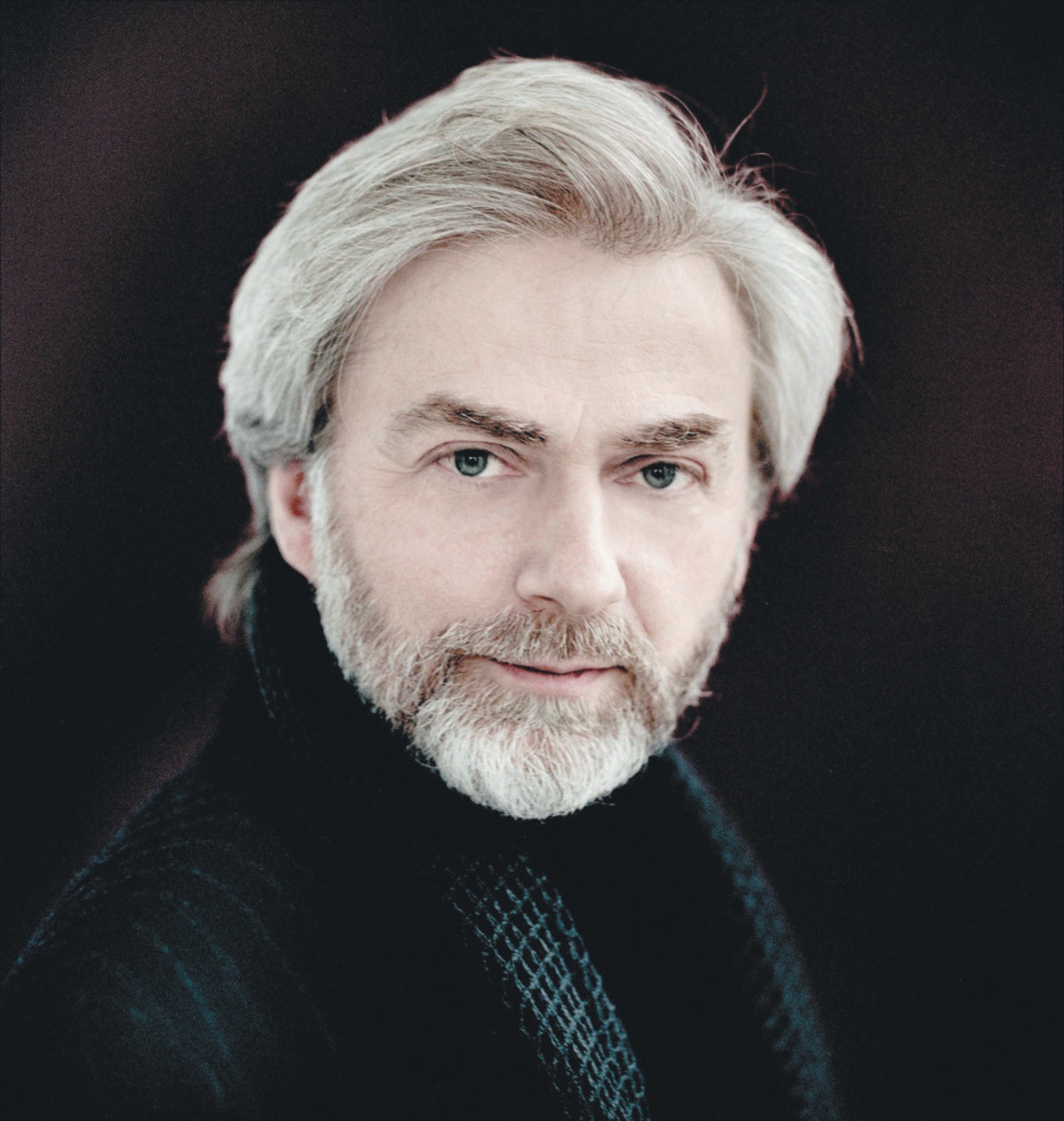
The dazzle and delight of Polish virtuosity – Krystian Zimerman in the Philharmonie de Paris

« La dernière chose – celle dont l’art est fait – se passe dans la salle de concert. »

Krystian Zimerman

One of the most famous lines of Saint-Exupéry’s little masterpiece of reflection Le Petit Prince says that what is essential is invisible to the eye, for it is only with the heart that one can see rightly. Eyes – the window to one’s soul, the extraordinary chain of mechanisms of light and refraction that enables us to behold the beauty of the world. And yet there is still so much they cannot touch, cannot reveal. Experience would confirm to any of us at a certain point in our lives that very often there is a long distance to be covered between the eye and the heart, when the true meaning of shapes and luminescence becomes lost on us unless a higher organ of perception is called to help.

On Friday evening, 7th June, I wondered, while seated in the spacious, floating lagoon that is the Paris Philharmonic, that if there is truly so much the eyes cannot see, then, possibly, how much is there the words cannot tell?

A handsome gentleman walked onto the podium that moment, his silvery hair as resplendent as the touch of his hands on the ivory keys of the grand piano, his graceful poise so controlled and yet so emotionally eloquent that it made all the words in the world meaningless and superfluous, for in those two hours everything was said, though no verbal communication was transmitted between the sold-out hall and the artist.

There are undoubtedly few delights this world can offer quite like the musical artistry of Krystian Zimerman – the living legend of pianism. The clarity of his tone, the fineness of his touch, the acute presence and mastery of emotional balance rendering his performance the peak of artistic splendour makes for an unforgettable experience with the divine language of music. A powerful stage presence made itself felt the moment his hands touched the keys without much reticence, and the opening motive of Brahms’s Piano Sonata no. 3 in F minor spurted from beneath his fingers in an impetuous, majestic cry accentuated by a heavy descent of the bass line.

As it is the custom with Brahms, strong currents of lurid passion are interlaced with heart-piercing tenderness where lilting motives of lyrical beauty are set off by sturdy maladroitness of the contrasting, heavy themes. Sonata in F minor is definitely a mysterious, complex piece that is very hard to grasp and leaves much to ponder. Even a trained listener has to tune his alertness to the finest levels of perception to be able to unveil all the themes and counterthemes that evolve, repeat and overlap throughout the long piece, and thus to get an accurate glimpse of the composer’s fiery intelligence.

Beginning with a furious Allegro maestoso, the sonata proceeds from a place of tragic insistence to an oasis of poetic reflection of the Andante movement only to dash into a tricky Scherzo that feels more like a sinister grin than an innocent joke. The whole piece is completed by pensive, subdued and somewhat funebrial Intermezzo with subtle hints at the famous main motive of Beethoven’s 5th symphony scattered all over the place. The listener is then led to a vigorous Finale through which rays of warmth shine every now and then thanks to motives in major keys, and the triumphant, virtuosic ending leaves an aftertaste of victory, effectively erasing all the gloom and heaviness of the previous struggles.

In Krystian Zimerman’s hands, this complicated, almost 40 minutes long piece of music transformed into a stream of liquid silver as he with breathtaking command steered this exhaustive search of self into a place of transcendence and beauty where one is strictly confronted with both the darkness and light of existence, and where these marked contrasts no longer fight for predominance, but rather live in perfect harmony, complementing each other by mutually highlighting their most splendid features.

The following program consisting of Four Mazurkas op. 24 and four Scherzos by Frédéric Chopin was like a breeze of fresh air flowing through a sunlit garden in full bloom. The art of melodic ingeniousness supported by steady harmonic development of these heart-warming pieces (a trait so pronounced and everpresent in Chopin’s compositions) was delivered with both joy and ease, and as each of the Scherzos was followed by a thunderous applause, that enigmatic je ne sais quoi that exists only during those ephemeral moments of music making was suddenly overwhelmingly tangible and palpable.

As I was leaving the large hall with the roar of approval and appreciation from the audience still ringing in my ears and the dazzling, thankful and humble smile of the artist firmly fixed within my heart, that moment I knew that during those two hours of a dream come true and pure aesthetic bliss – for the eyes as for the ears – I had had the privilege to be a part of a one-of-a-kind performance, a witness of a great life experience and deep feeling transmuted into music where each timbre of sound delivered a nostalgic rush of emotion, inviting the listener to share that moment of perfect vulnerability with the artist, and challeging him to do the most daunting task one can possibly imagine – to let go of walls, let go of denfenses, and feel the naked intimacy of being confronted with the secrets of one’s heart.